In partnership with


Picture this.
You just finished your master's degree.
On one side is a medical sales job with a steady paycheck. On the other is an unpaid sales and operations internship with your local minor league hockey team.
Most people would take the paycheck.
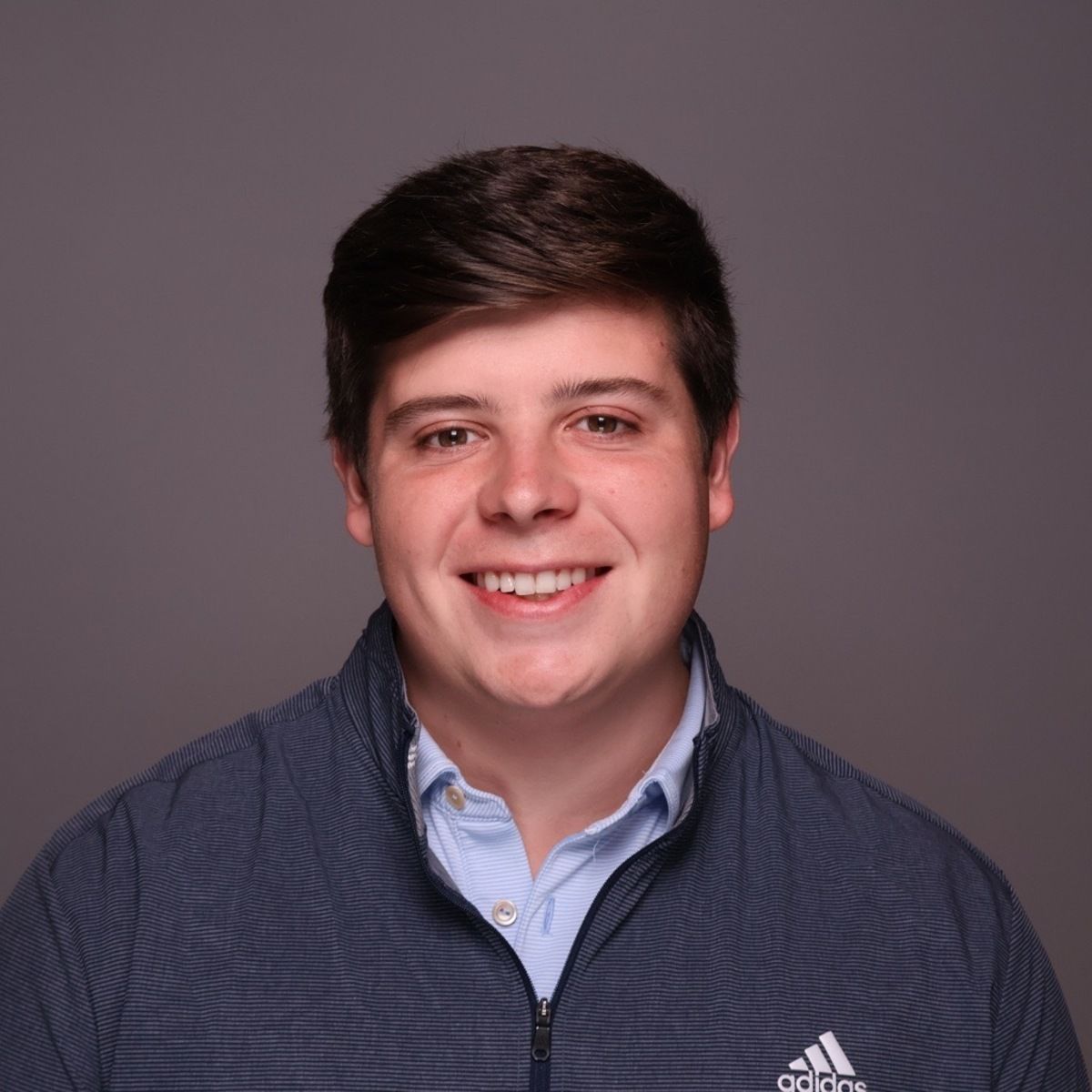
Shawn McIntosh chose sports.
Good decision, because today Shawn is the CEO of the Las Vegas Lights FC, one of the most unique clubs in American soccer. Before that, he served as Charlotte FC's first-ever Chief Fan Officer, led revenue efforts for multiple professional teams, and built a reputation as one of the most respected fan engagement leaders in sports.
But none of that was part of the original plan.
In fact, Shawn didn't even know sports business was a career.
Growing up, he loved sports. He played soccer, watched ESPN constantly, and consumed anything sports-related he could find. But when he arrived at college, he studied criminal justice and political science with plans to eventually attend law school.
After graduation, he took a job at a juvenile detention center, and while the work was meaningful, it just wasn't for him.
Around that time, he was introduced to a sports business program at California University of Pennsylvania and for the first time Shawn was exposed to the idea that there were careers in sports beyond playing or coaching.
He went back to school, earned his master's degree in just one year, and started searching for opportunities.
At the time, Shawn was living in Virginia Beach, where his parents were living. Which is important because one day his father encouraged Shawn to literally walk into the offices of the Norfolk Admirals, a minor league hockey team, and ask if they were hiring.
No way that worked right...
It did.

Shawn’s Career Path
The team was hiring a class of interns, Shawn applied, interviewed, and shortly after was offered an unpaid internship.
At the same time, he received an offer for an entry level medical sales position.
A tough decision, but with support from his family, Shawn took the internship, and for the next year, he did whatever the team needed.
One day he was making sales calls to local churches from a phone book trying to sell Faith & Family Night. Another day he was sending fax blasts, packaging chuck-a-pucks, setting up game-day promotions, or helping prepare the arena for fans.
It was what I would call a "do everything job", which was exactly what he was looking for.
Minor league sports forced Shawn to learn every part of the business. There weren't enough staff for each person to stay in a single lane. Everyone pitched in wherever help was needed.
At the end of the season, the Admirals offered him a full-time position making $20,000 a year with no commission.
After working for free, it sounded pretty good.
Over the next four years, Shawn worked his way up through the organization. He continued selling group tickets, but he also became increasingly involved in game entertainment and fan experience.
When the team's Director of Game Entertainment left, Shawn raised his hand.
He started picking up responsibilities, helping where he could, and proving he could handle both sides of the role. Eventually, the club officially gave him the title.
By the time he left Norfolk, Shawn was overseeing group sales and game entertainment, managing everything from sponsor activations and promotions to goal songs and in-arena entertainment.
Then an opportunity with the Phoenix Suns opened up.
On paper, the move didn't make much sense.
Shawn was leaving a director-level position where he touched almost every part of the business to become an Account Executive focused primarily on ticket sales.
But he saw something bigger.
The Suns had built one of the strongest talent development cultures in sports. Shawn describes the experience as his "Harvard" of sports business.
He was surrounded by business intelligence teams, advanced analytics, structured sales systems, and leaders who had built careers at the highest levels of the industry.
The move narrowed his responsibilities, but it expanded his perspective and career opportunities within sports.
After a few years in Phoenix, Shawn was ready for another challenge.
He wanted to work in soccer.
When a Senior Account Executive role opened with the Houston Dynamo, he jumped on it. Another questionable move on paper - it wasn't a major promotion and, in some eyes, could have been considered a lateral move.
Shawn viewed it a little differently. It was an opportunity into professional soccer, and he was confident that with his skillset he would quickly rise to the top and earn that promotion to the next level.
Four months after starting, he cashed that bet and was promoted to Inside Sales Manager. That's calling your shot.
Shawn didn't slow down after the promotion, rather the opposite. He took a bigger swing.
At the time, MLS relied heavily on a centralized league sales center, but Shawn believed the Dynamo could benefit from building their own inside sales program (a program that he had worked closely on with the Suns).
He put together a business plan, pitched leadership, and was given the greenlight to start it up. He started with just a handful of representatives in the first season, but within a few years grew it to a team of fifteen, earning multiple promotions in the process and eventually being named the clubs Director of Ticket Sales.
Then he received a phone call that caught him off guard.
A former colleague wanted him to consider an opportunity with the Las Vegas Aces.
His initial answer was no.
Soccer was his passion, and Las Vegas wasn't a city he and his wife had ever envisioned calling home. But the more conversations he had, the more the opportunity made sense.
The Aces were entering a new market. MGM Resorts owned the franchise. The chance to help build a professional team in a city that was rapidly becoming a major sports destination was difficult to ignore.
So, Shawn packed up and headed west.
He was with the team for almost 3 years as their Director of Ticket Sales & Service. Then two things happened. 1. Covid hit. And 2. Shawn and his wife were preparing to welcome their first child.
They moved back home to Virginia to be closer to family and Shawn started looking for his next opportunity.
It turned out to be quite the full circle moment when the Norfolk Admirals began searching for their next Chief Revenue Officer.
Shawn didn't walk into the building and ask for an application this time, but he did reach out, connect with ownership, and met them for coffee.
And once again, the conversation turned into a job offer.
More than a decade after walking into the team's office looking for an internship, Shawn returned as the club's CRO. Pretty damn cool.
What is a CEO in Soccer?
The Chief Executive Officer (CEO) is the top business executive of a soccer club. While coaches and sporting directors focus on what happens on the field, the CEO is responsible for everything off the field that helps the organization operate and grow.
A soccer CEO oversees revenue generation, ticket sales, sponsorships, marketing, communications, fan experience, operations, finance, and staffing. They work closely with ownership to set the club's vision and strategy while ensuring the business side of the organization is financially sustainable. Depending on the size of the club, a CEO may spend their day meeting with corporate partners, evaluating budgets, hiring staff, shaping brand strategy, negotiating major deals, or helping drive long-term growth initiatives.
At smaller clubs, the role can feel like running a startup. CEOs often wear multiple hats and are involved in nearly every major decision. At larger organizations, they lead teams of executives responsible for different business functions. Regardless of the club's size, the CEO's primary job is to build an organization that can thrive both on and off the field.
The reunion didn't last long, because just a few months later, Charlotte FC reached out about a role that had never existed before.
Chief Fan Officer.
The title was unique, but the responsibilities aligned perfectly with Shawn's background. His entire career had been built around understanding fans. Ticket sales taught him how to attract them. Services taught him how to keep them. Game entertainment taught him how to engage them.
Charlotte wanted someone who could help shape the identity of an expansion club from day one, and Shawn was up for the task.
Over the next three years, Shawn helped establish many of the traditions, experiences, and fan-focused initiatives that became synonymous with Charlotte FC's early years.
His fingerprints are all over what has made Charlotte FC one of MLS's most dynamic brands: The Poznan, The Coronation, and the kit design. He and his team even delivered MLS’s single-match attendance record: 74,479 – March 5, 2022.
Then another opportunity emerged.
After former MLB All-Star Jose Bautista purchased the Las Vegas Lights, Shawn was introduced to him through Kyle Sheldon, Founder and CEO of Name & Number.
The conversations didn't lead with a job opportunity - Jose simply wanted someone he could bounce ideas off of.
The two spoke regularly. Shawn shared advice, answered questions, and helped Jose think through different aspects of the business.
Months passed before Jose asked a simple question:
"What would it take to get you out here?"
Shawn now leads the Las Vegas Lights as CEO.
He started off in startup mode, growing the staff and laying the groundwork for the processes and systems that would guide the club forward.
Now, heading into year two he can focus on the fun stuff, growing the fan base, expanding partnerships, driving revenue, and most importantly continuing to tell the story of what the Las Vegas Lights can become.
Most unpaid minor league hockey interns don't turn into CEO's of soccer teams, but Shawn did. How does that happen? Betting on yourself, committing to innovation, and never backing down from the next challenge.
Dream big, and back it up. That's how you make it to the top.
Q&A: Becoming the CEO of a Professional Soccer Club with Shawn McIntosh

Q. You started in ticket sales and eventually became a CEO. What do young professionals misunderstand about the value of starting in sales?
A. I think there is generally a negative stereotype associated with sales roles. Many young professionals tend to gloss over all the core functions of a sales role and fixate on those elements of the job that may seem more challenging. The transferrable skills that come with sales roles can set you up for so many opportunities in the sports industry.
Q. You were on the cutting edge of fan experience with Charlotte FC and are now implementing a similar approach with the Las Vegas Lights. What does it take to foster a fan base that is deeply invested in the club?
A. It all starts with trying to build an authentic connection with your fan base. Like anything, it’s all about relationships and striving to understand your fans. I’ve done that by making myself accessible to our supporters by listening and engaging in conversations. In both Charlotte and Las Vegas, we’ve spent time and resources on measuring what our fans were saying and creating actionable items based on live feedback. When a fanbase recognizes that their feedback is being acted on and that they are a true partner in building the experience, there is a greater sense of investment.
Q. You’ve made several moves that look unusual on paper, leaving a director title for an account executive role and leaving a role in the sport you are most passionate about (soccer) for the WNBA. How should young professionals think about evaluating opportunities beyond title or logo?
A. I’ve always taken into consideration who I was going to be working directly under more so than the logo of the club. This industry is all about people and I’m a big believer in surrounding myself with great humans that have similar ambitions. Secondly, I evaluate the scope of work and the impact I can make before concerning myself with titles. If I can get passionate about the work I am doing every day and know that I’ll get to do it with great people, the logo on my business card becomes a footnote.
Key Takeaways
1. Don’t chase titles, chase growth
Several of Shawn's biggest career moves looked like lateral moves—or even steps backward—on paper. He left a director role for an account executive role with the Suns because he believed the experience and development would pay off long term.
2. Don’t sleep on minor league sports
In Norfolk, Shawn wasn't confined to one department. He sold tickets, helped with marketing, managed game entertainment, worked sponsor activations, and learned how every piece of a sports organization fits together. That breadth became a major advantage later in his career.
3. Relationships create opportunity
Nearly every major transition in Shawn's career can be traced back to a relationship. A former colleague called about the Aces. A coffee meeting led to the Admirals CRO role. Conversations with Jose Bautista eventually led to becoming CEO.
Feeling Inspired? Check out these opportunities.
Closing Thoughts
Thank you for reading this week’s edition of So You Want to Work in Sports. I appreciate you being part of this community.
If you have ideas, feedback, or future guest suggestions, feel free to reach out at [email protected].
If you want more hands-on support as you navigate the start of your career within sports, book a 1:1 session with me here. The sooner you start preparing, the more confident you will feel when opportunities come your way.
Win the week!
-Ethan
Want more from Shawn?
Connect on LinkedIn
Your business has grown. Is your accounting on the same path?

When you started out, doing your own books made sense. But the business you're running today isn't the one you started. If your accounting hasn't kept pace, it's quietly costing you — outdated financials, no clear view of what's actually profitable, and hours every week pulled away from the work that grows your business. At BELAY, our Financial Experts integrate directly into your business. They manage your books, reconcile accounts, run payroll, and deliver the timely insight you need to make big decisions with confidence. Stop guessing. Start knowing.