In partnership with


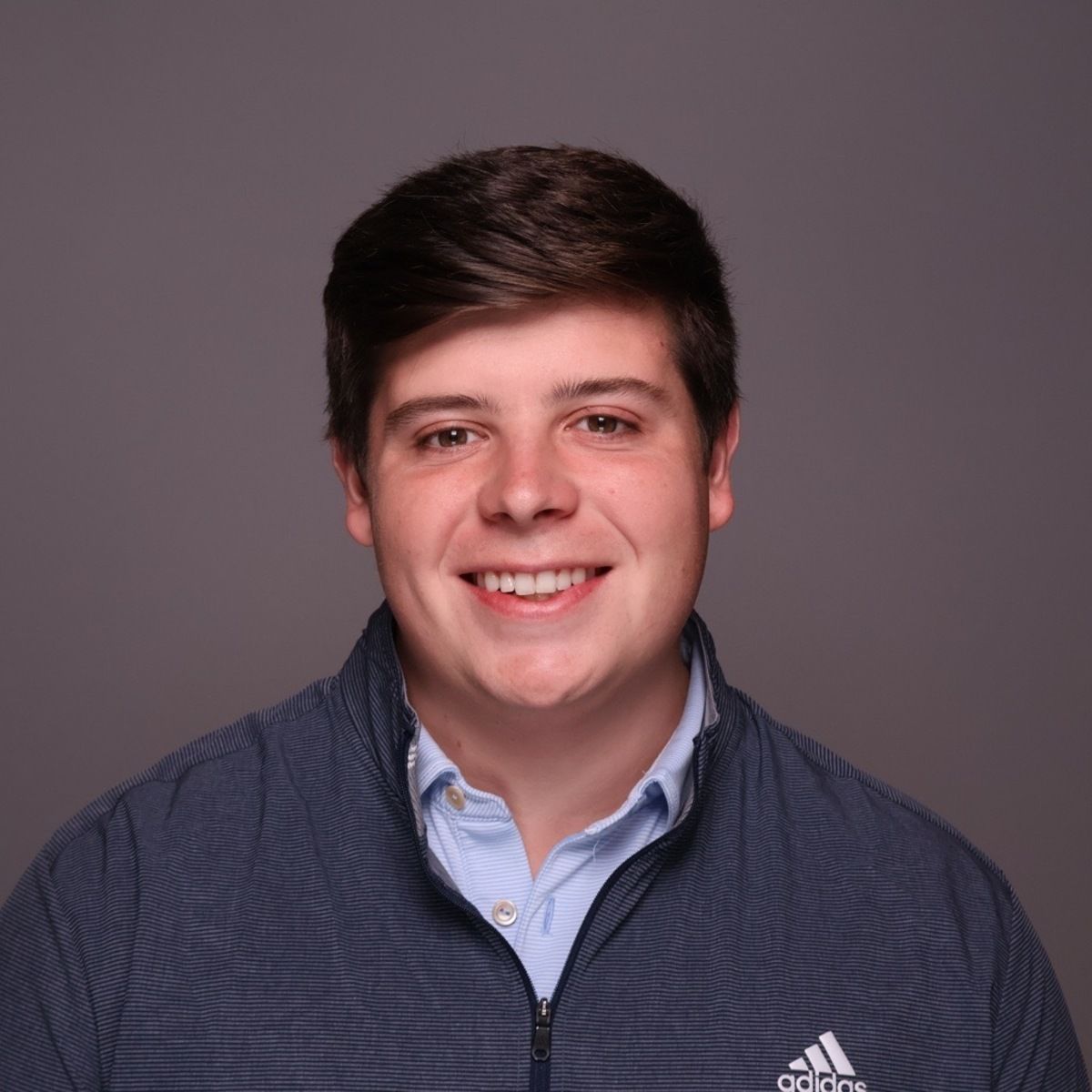
Meet Miller Yoho.
Miller went to Furman University to study history with plans of becoming a high school teacher. A couple of months in the classroom was all it took to realize that high school students weren't exactly his cup of tea.
So he shifted his focus to another part of higher education he enjoyed: campus recreation. He went to Clemson to earn his master's in education, higher administration, and counseling, and spent two years as a graduate assistant running the university's fitness programs.
After graduation, Miller set off to find a role in higher education, but even after dozens of applications, nothing. Then finally, an opportunity came through at Queens University of Charlotte.
The position was part of a rotational program designed to move him through different areas of the university, and his first stop was the athletic department.
It ended up being the only stop, because in that role, something clicked. Miller loved getting to tell the stories of Queens' student-athletes and showcase the experience they were having at the school. Finally, for the very first time, he started thinking about sports as something that could actually become a career.
At this point, Miller had never studied sports management, marketing, business, communications, or anything else relevant to working in sports and he didn't have any previous experience working in college athletics. Thankfully, Queens gave him one heck of a crash course.
After his initial role, Miller was hired full time as Director of Athletics Marketing and Promotion, but at a small Division II athletic department, his title only told part of the story. He served as the SID for six sports, handled marketing across all 19 varsity programs, and worked on sponsorships, ticketing, promotions, media relations, and just about anything else that needed to get done…including sitting in on a few drug tests.
For someone trying to learn the sports industry, it was an incredible opportunity. Miller got exposure to nearly every part of an athletic department and quickly learned how to get things done without massive budgets or departments full of specialists to lean on. But after two years of 70 and 80-hour weeks, the pace was starting to catch up with him.

Miller’s Career Path
So Miller called Steve Luquire, a Charlotte advertising executive he had to know over the years, looking for advice. He was feeling burnt out and wanted the perspective of someone he trusted. Steve happened to sit on the Queens board and connected Miller with Will Webb, then Executive Director of the Charlotte Sports Foundation.
Miller met Will for about 30 minutes to talk about the organization and his career. He was appreciative for the networking chat, but what he didn't realize was that Will was also considering him for an open position. You can imagine his surprise when he received an email a few days later asking him to join the Charlotte Sports Foundation as Director of Communications.
At the time, CSF's portfolio centered around Charlotte's annual bowl game, then known as the Belk Bowl, and the ACC Football Championship Game. Miller was tasked with finding ways to tell the story of events that only happened once a year, which gave him plenty of room to experiment. He rebuilt websites and newsletters, leaned into social media, worked alongside agency partners, and found creative ways to make the bowl part of the broader college football conversation even when nobody knew which teams would ultimately be playing in it.
After a few years, Miller was enjoying the work but once again felt like there was more he could learn. That opportunity came through Luquire, the agency founded by Steve Luquire, the same mentor who had helped Miller land at CSF in the first place. The agency worked closely with the Foundation, so the move allowed Miller to continue supporting CSF while expanding his experience across a much wider group of clients and projects.
Over the next two years, he worked on everything from the PGA Championship to Visit North Carolina and corporate brands outside of sports. He learned the agency side of the business, gained exposure to different industries, and started building a skillset that stretched well beyond the communications work he had originally been hired to do.
By 2018, Miller was ready to try something different again. This time, instead of joining another organization, he decided to bet on himself and launched Yoho Creative, a marketing and social media consultancy. Suddenly, he wasn't only responsible for doing the work. He had to find clients, manage relationships, deliver results, and figure out everything else that came with running a small business.
One of those relationships connected Miller with The Littlefield Company, a Charlotte-based video production company. Early on, the two worked together on a project for the Carolina Hurricanes as the team returned to the playoffs for the first time in a decade. With a small team and an ambitious idea, Miller served as project manager as they drove roughly 1,200 miles across North Carolina capturing what the Hurricanes meant to fans from the mountains to the coast. Years later, it's still one of the creative projects Miller is most proud of.
That relationship eventually turned into a full-time role as Littlefield's COO and Director of Strategy, where Miller helped manage the company and its growth. Then the pandemic hit, and his job suddenly included figuring out how to keep a small video production business moving through a period when producing video became a whole lot more complicated.
What is a Sports Foundation?
Sports foundations and commissions help cities attract, create, and operate major sporting events. Unlike a professional team, which is focused on one franchise and its season, these organizations can work across dozens of properties and sports while using events to generate tourism, economic activity, and exposure for their region.
That work can include recruiting events to the market, managing relationships with leagues and governing bodies, selling tickets and sponsorships, marketing events, coordinating volunteers and media, supporting operations, and serving as the local organizing committee when outside properties come to town. For someone interested in working across multiple sports without being tied to one team, organizations like the Charlotte Sports Foundation offer a unique corner of the industry.
Around the same time, things were changing at the Charlotte Sports Foundation. Miller heard that his old role could soon be opening up, and after several years away, the opportunity to return caught his attention.
This time, there was no need for an introduction. Miller had stayed close with the people at CSF throughout his time away, so he called Will Pitts, then the organization's COO, and pitched the idea of coming back in an expanded role. He was returning with a much different skillset than the one he had left with. In the years since, he had worked at an agency, built his own business, managed a growing company, developed strategy across different industries, and helped lead a team through a pandemic.
It proved to be enough.
In June 2021, Miller returned to the Charlotte Sports Foundation as Director of Communications and Marketing.
Today, Miller has a piece of himself in nearly every part of every event the Foundation touches. He leads marketing and communications, develops media strategy, works with creative and agency partners, oversees social content, serves as a spokesperson, supports ticket sales, and jumps in wherever the team needs him. The variety that defined his first sports job at Queens is still there, only now the events are taking place on some of the biggest stages in Charlotte.
The Foundation has grown right alongside him. What Miller first joined more than a decade ago as an organization primarily known for its bowl game and the ACC Football Championship has developed into a year-round operation working across college football, basketball, running, soccer, golf, and more.
The last few weeks have been a pretty good example.
CSF welcomed Virginia and West Virginia to Bank of America Stadium for the Duke's Mayo Classic, then helped announce that the WTA Finals will come to Charlotte beginning in 2027 as part of a deal that will also establish Charlotte as WTA's global headquarters.
Those are the kinds of opportunities Miller now gets to help bring to life in the city where his sports career started.
Life looks a little different than his original ambitions… but Miller wouldn’t have it any other way.
Q&A: Building a Career in Sports Communications and Marketing with Miller Yoho

Q. You’ve built a career in sports marketing and communications without formally studying either. What experiences or skills have been most important in getting you to where you are today?
A. So much of working in sports comes down to intuition. At the end of the day, our job is to understand who our fans are and what they want from their experience, while keeping our sponsor, ticketing, and partner obligations in mind. When we get that balance right, we create events that don't just check the boxes for our partners but go beyond what fans expect, and that's what makes an event feel unique.
Ive also had to do a lot of learning on my own. I've never been afraid to ask questions, look up a term I didn't know, or find ways to educate myself. And what I've found is that marketing in particular relies heavily on soft skills: understanding people, building relationships, and managing how people approach sports and their experiences. In that way, my counseling degree has actually been a real advantage.
Q. From working in college athletics at Queens to running your own business to your role today at CSF, you’ve consistently had to wear a lot of hats. How has that shaped you professionally?
A. Wearing a lot of hats comes naturally to me. I've never been someone who focuses on just one thing or thinks in a straight line. Instead, I take pride in having breadth in my work and looking at the full picture. I understand that a decision in one area affects the fan experience or how people engage with us online in another. Even something as simple as a logo decision has ripple effects, and I track those across every part of my role.
It also keeps things fun and interesting. No two days are the same, and I never walk into the office expecting a typical nine to five. There are constant changes, adjustments, and decisions, some of which fall outside my job description. That's the beauty of being on a small team where trust is built and everyone shares the same goal: creating the best possible experience for our fans.
Q. Relationships have played an important role throughout your career. What does good networking look like to you, especially for someone just starting out?
A. Networking is an interesting word to me. I've never really enjoyed large group settings, and my personality leans more toward one-on-one relationships. Building and cultivating those individual connections has been incredibly valuable throughout my career.
What surprises me is how many people early in their careers reach out, have a great conversation, and then never follow up. There's no check-in and no real relationship, so it ends up feeling transactional. That's something I've always tried to avoid with my own mentors and connections. Ask questions, show gratitude, and focus on getting to know the person rather than just what they can do for your career.
Key Takeaways
1. Don’t be afraid to grow
Sometimes growth means being willing to leave something you enjoy to try something new. Each move Miller made exposed him to different people, responsibilities, and ways of working that ultimately made him better at what he does today.
2. Find a mentor
Having someone you trust to turn to for advice can change the direction of your career. Miller’s relationship with Steve Luquire started as mentorship, but over time, Steve became an important advocate and connector throughout his journey.
3. Stay in touch
A relationship doesn’t have to end when you leave a job or organization. Miller stayed connected with the people he worked with throughout his career, and years after leaving CSF, those relationships helped create the opportunity for him to return in an expanded role.
Feeling Inspired? Check out these opportunities.
Charlotte Sports Foundation Internship program is currently closed for applications, but can be found here.
The foundation frequently has opportunities for students and young professionals to volunteer. You can express your interest for volunteering at future events by emailing [email protected].
Closing Thoughts
Thank you for reading this week’s edition of So You Want to Work in Sports. I appreciate you being part of this community.
If you have ideas, feedback, or future guest suggestions, feel free to reach out at [email protected].
If you want more hands-on support as you navigate the start of your career within sports, book a 1:1 session with me here. The sooner you start preparing, the more confident you will feel when opportunities come your way.
Win the week!
-Ethan
Want more from Miller?
Connect on LinkedIn
The agentic era needs a different CRM. That’s Attio.

Teams like Parallel, Turbopuffer, and Wordsmith are already setting the pace on Attio. Get an always-on revenue engine, with agents and workflows that build pipeline, chase every buying signal, and move deals forward with your team. Whether you're working in your browser, inbox, or favorite agent, connect to your customer data in real-time through Attio's web app, MCP, API, and SDK.