In partnership with


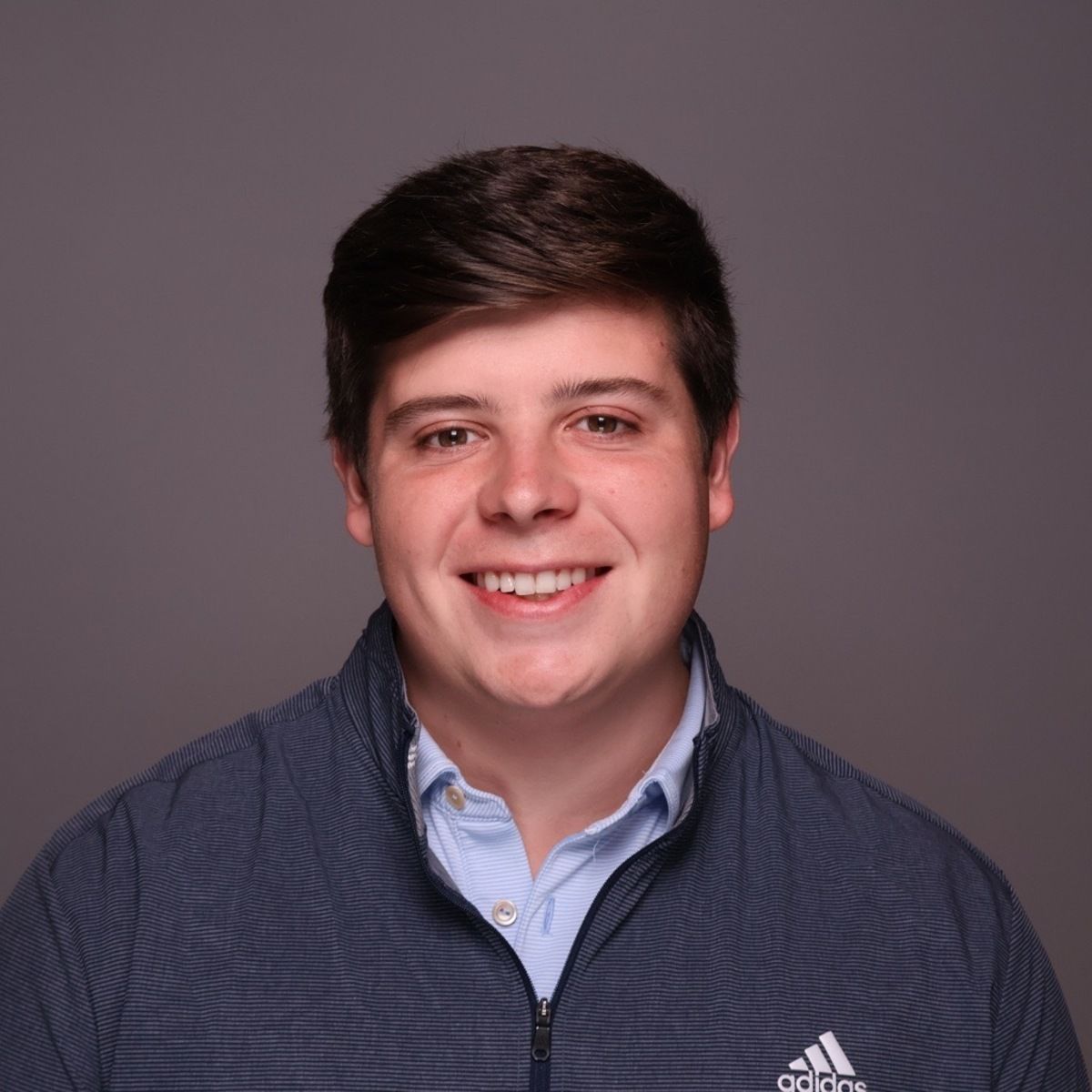
Meet Tyson Hutchins.
Tyson is one of the leading creative minds in college athletics.
He serves as the Senior Associate Athletic Director for Creative Strategy at BYU, where he leads the department’s in-house creative agency and oversees how the BYU brand comes to life across content, digital, social, and more. Before that, he held a similar role at Clemson, one of the most innovative departments in the space.
His work has been featured by the Wall Street Journal, ESPN, Sports Business Journal, Front Office Sports, The Athletic, and the New York Times. Through his consultancy, Hutch Made Co., he has worked alongside organizations like the X Games, NBA, NASCAR, and Gantt C.S..
Pretty impressive resume for someone who had absolutely no plans to work in sports.
Tyson did grow up in a sports family. His dad was a high school football coach, he played football and baseball growing up, and eventually played JUCO baseball before transferring to BYU. But unlike many of the creatives he works alongside today, there was no middle school photography class or childhood obsession with cameras that pointed him toward his eventual career.
In fact, Tyson was planning to become an attorney.
He had taken the LSAT and was working his way toward law school when he came across an internship opening with BYU Athletics. Somehow, despite spending most of his life around sports, it had never really occurred to him that working in an athletic department could be a career.
He applied anyway, joining a department that at the time had just one full-time social media employee. Tyson was making Vines, running the football Snapchat, and live tweeting volleyball games, getting an early look at a side of sports media that was still very much being figured out.
As he got more involved, he also started paying attention to where the industry was headed. Instagram had recently introduced video, and social content was becoming increasingly important, but most of the video content being produced in college athletics was still built for more traditional platforms.
Tyson saw an opportunity and decided to teach himself how to do it.
He would find edits he liked online and try to reverse engineer them, learning how they were shot and recreating the effects in Premiere. He watched YouTube tutorials and started experimenting with an old Canon camera that had been sitting on a shelf in the athletic department. Within about 90 days, he had taught himself how to shoot, edit, and produce the type of social-first video content that was quickly becoming more valuable across sports.

Tyson’s Career Path
It didn’t take long for his newly developed skillset to pay off. While still an intern, he sat in on a meeting about the videos being produced for BYU’s football and basketball video boards and learned how much the department was paying an outside agency to create them. Tyson believed he could do the work internally for a fraction of the cost, so before he graduated he went to BYU’s head of external and pitched exactly that.
Hire me, and I can do this for you.
It worked.
The initial position was technically only three-quarter time and paid less than $30k a year, but Tyson was thrilled. He had found a way to stay in sports and, more importantly, learned an early lesson that would follow him throughout his career: if you can identify a problem and show someone how you can solve it, you can create opportunities that might not otherwise exist.
Over the next few years, Tyson continued developing his craft at BYU while also making a point to learn from the people he thought were doing it best.
At the top of that list was Clemson.
Tyson viewed Clemson as the gold standard for creative content in college athletics. Rather than simply admiring their work from Utah, he started reaching out to members of the department to ask questions, swap ideas, and better understand how they operated.
At the same time, he was making sure his own work was visible.
BYU was still independent in football and playing basketball in the West Coast Conference, so Tyson knew the program wasn't automatically going to receive the same national attention as some of the biggest brands in college sports. He made a conscious effort to share the work his team was creating publicly, allowing people throughout the industry to see what was happening in Provo.
The two efforts came together in 2020 when Clemson opened up a role on their creative team. Between the relationship he had formed and the work of his that the team had seen, bringing on Tyson was a no brainer.
For the next two and a half years, he got an inside look at the program he had spent years studying and admiring from afar. Tyson’s work touched social, digital, and creative across the department. In his words, it was a master's degree in college athletics.
It gave him a chance to work at a higher level and at a greater scale, and it also expanded the way he thought about and approached creative work. He learned new ways that content could help shape a brand, impact recruiting, create new sponsorship opportunities, support fundraising, and ultimately drive revenue for an athletic department.
Then BYU came calling again.
What is Creative Strategy in Sports?
Creative strategy is the process of determining how a team, league, or athletic department brings its brand to life across the many places fans interact with it. That can include social media, video, graphics, digital platforms, uniforms, in-venue content, and more. Creative teams help determine what stories an organization tells, how it tells them, and how the brand consistently shows up across each platform.
At the highest level, creative strategy also connects that work back to the larger goals of the organization. Great content can help sell tickets, attract recruits, create sponsorship opportunities, support fundraising, and introduce the brand to new fans. That means creative leaders aren't just focused on making things that look good. They're thinking about how creative work can help the organization accomplish its goals.
The school was preparing for its move into the Big 12 and expanding its athletic department to compete at a new level. For Tyson, the opportunity was a chance to take everything he had learned and bring it back to a place he already cared deeply about.
Today, Tyson's role stretches far beyond making great content.
As Senior Associate Athletic Director for Creative Strategy, he leads the school's in-house creative agency and thinks about how the BYU brand shows up everywhere from social media and digital platforms to uniforms, retail, broadcasts, and beyond. He also sits on the athletic department's executive cabinet and has become increasingly involved in one of the most important conversations in modern college athletics: revenue.
The videos and graphics still need to be elite, but Tyson wants them to accomplish something. That could mean driving ticket sales, supporting recruiting, creating new sponsorship inventory, strengthening fundraising, or simply making sure BYU makes the right impression when the world is watching.
Alongside his work at BYU, Tyson has also built Hutch Made Co., a sports creative consultancy that has allowed him to work with organizations across the industry. It stemmed from the overflow of inbound messages he has received, largely in part because of the way he shares his work online.
"The work speaks for itself, but if I'm not visible, I don't think I have the opportunities that I have."
If you are trying to build a career in sports creative, there may not be a much better blueprint than Tyson.
Learn the skills, find ways to provide value, build genuine relationships with people you can learn from….
And never be afraid to show people what you can do.
Q&A: Building a Career in Sports Creative with Tyson Hutchins

Q. When you’re evaluating young creatives, what separates the portfolios and candidates that immediately get your attention?
A. Great work can shine regardless of the league, team or resources behind it. I do not care whether something was created for a major brand or a small high school. Taste, creativity and execution are easy to recognize.
I also look for people who are already creating the type of work we are hiring them to do. If you want to work in sports but your portfolio is entirely long-form vlog content, it is harder for me to picture you succeeding in that role. Tailor your portfolio to the job you want. You do not need to have held that exact position before, but you should create work that shows you understand the audience, format and pace of the industry.
The best portfolios show the hiring manager what you might be able to do.
Q. You taught yourself video by studying other creators and reverse engineering their work. For someone trying to develop a new creative skill today, what does that learning process look like in practice?
A. That is still how I learn. Find work you admire, break it down into individual decisions and try to recreate it. Then take the principles you learned and apply them to something of your own.
The biggest mistake is spending months watching tutorials and confusing consumption with practice. The tools are better now. You have YouTube, AI and access to talented people all over the world. But the learning loop has not changed: study, make, compare, get feedback and repeat.
Every finished project reveals the next thing you need to learn.
Q. You’ve said that nearly every major job, freelance project or consulting opportunity in your career can be traced back in some way to sharing your work publicly. How can young professionals build visibility around their work without coming across like they’re constantly self-promoting?
A. There is a fine line between showing your work and chasing clout. Clout chasing is off-putting, especially when every post feels like a victory lap, a name-drop or an attempt to prove proximity to important people or events. At the same time, you cannot expect people to know what you can do if you never put yourself out there.
I recommend leaning into the process, not just the finished product. Show how you approached the problem, the decisions you made, what changed along the way and what you learned. Give credit to the people who helped. Make the post useful to someone beyond yourself.
When you consistently share how you think and work, you are building a public track record without making every post about you. That kind of visibility feels earned, and it gives people a real reason to remember you when an opportunity comes along.
Key Takeaways
1. Prioritize skill development
Tyson saw where the industry was heading and taught himself the skills to get there. Find the skills that will make you valuable and take ownership of learning them.
2. Find ways to provide value
Tyson turned an internship into his first job by identifying a problem and pitching himself as the solution. Don’t just complete the work assigned to you. Look for ways you can make an impact.
3. Build genuine relationships
Tyson’s relationship with Clemson started because he wanted to learn from people he respected, not because he wanted a job. Years later, that relationship helped open the door for his next opportunity.
Feeling Inspired? Check out these opportunities.
Closing Thoughts
Thank you for reading this week’s edition of So You Want to Work in Sports. I appreciate you being part of this community.
If you have ideas, feedback, or future guest suggestions, feel free to reach out at [email protected].
If you want more hands-on support as you navigate the start of your career within sports, book a 1:1 session with me here. The sooner you start preparing, the more confident you will feel when opportunities come your way.
Win the week!
-Ethan
Stop making AI decisions in the dark.

Leadership is asking: are we getting value from AI? Which tools are worth the spend? Where are we exposed? Right now, most teams have no idea.
Harmonic Security Usage Explorer changes that.
You get a complete picture of how your organization uses AI, automatically categorized into custom tasks and use cases.
You’ll see the projects being worked on, who’s using what tools, where AI investments are driving value, and where employees are engaging in risky behavior.
CIOs can rationalize spending and cut wasted licenses. CISOs can pinpoint where risk exists and neutralize it. AI committees can show exactly how their efforts are paying off.
/
/