Sponsored by


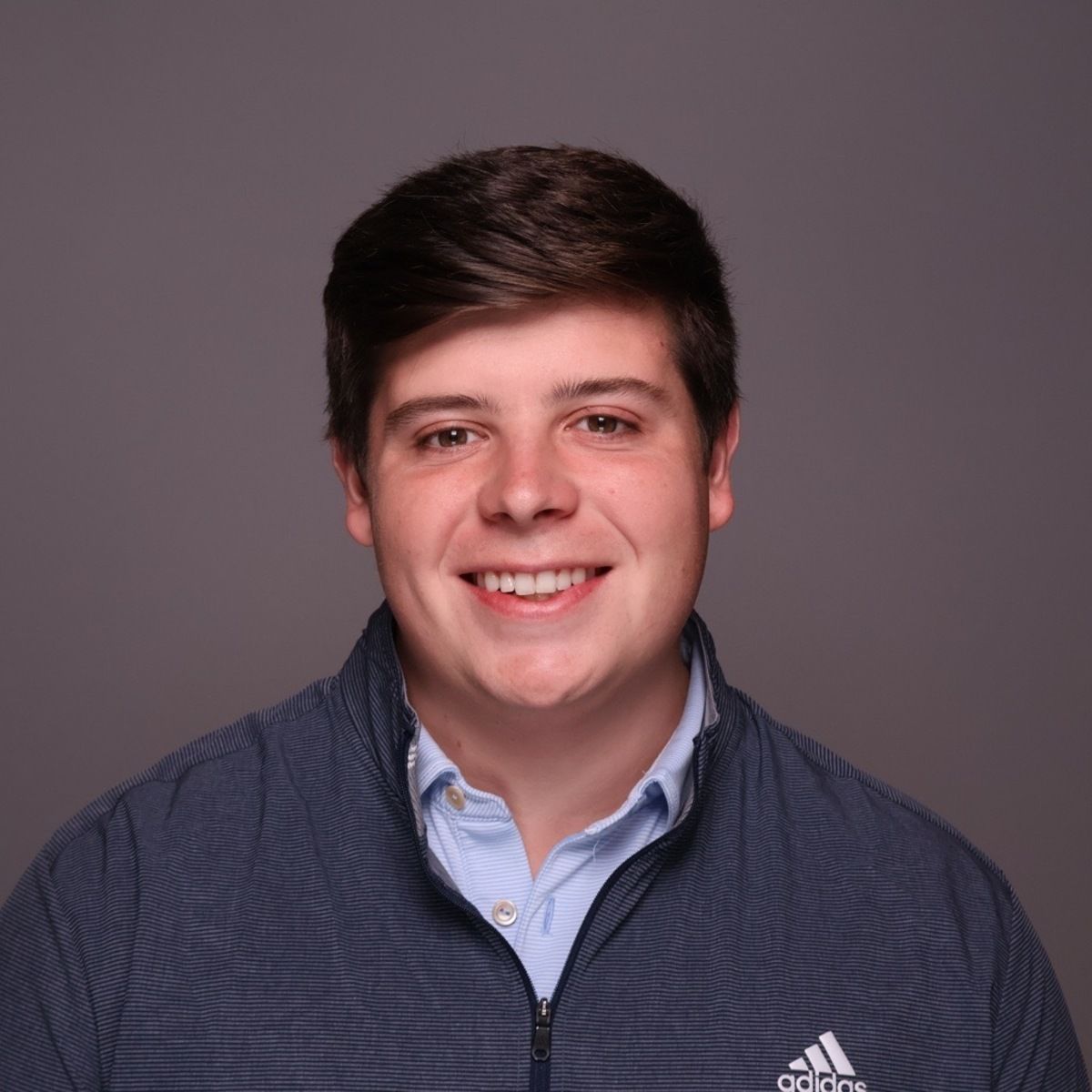
Meet Doug Holtzman.
Doug was born into this. His dad pitched in the St. Louis Cardinals organization. His uncle, Ken Holtzman, spent 15 seasons in the big leagues, threw two no-hitters, and was part of five World Series championship teams. His grandfather played college basketball. Sports wasn't a career path in the Holtzman house. It was the family business.
Ask anyone who knew Doug growing up what he'd be doing in twenty years, and you'd get the same answer.
"He'll either be in the major leagues, or he'll be working in sports."
They got one of the two right.
Doug didn't take much time to get started with his sports career. While he was still in high school, he interned at KPLR, the company that produced St. Louis Cardinals’ broadcasts, sitting in a small room with a bag of popcorn logging every game so the highlights could run on the evening news. Tedious? Maybe. But for a baseball-obsessed teenager, he was inside the building, learning how the business worked, and that mattered more than the task itself.
After high school, he enrolled as a business major at the University of Kansas with an emphasis in sports management. A bad arm had ended any real hope of following his dad and uncle onto a mound, so instead he threw himself into every internship he could find.
The best one came through a family connection to a small agency called Sports Management Group, which would later become SFX, and eventually Creative Artists Agency (now the largest sports agency in the world). At the time, their client list included Jerry Rice, Ryne Sandberg, and Joe Carter. Doug got to see athlete representation from the inside, right as Jerry Maguire hit theaters and made the job look like the coolest thing in the world.
He considered staying after graduation, but was encouraged by some of his mentors to go taste what else the sports industry had to offer first, promising him he could always come back.
So after finishing undergrad, Doug went to work for the Rockford Lightning, a minor league basketball team in the CBA owned by Hall of Famer, Isiah Thomas. If you've ever worked in the minors, you already know what that job looked like: a little bit of everything. Doug sold sponsorships & tickets, ran game operations, led community initiatives, and even stepped in as the mascot when he had to. He loved it, and still considers the minors to be one of the best training grounds in the business.
That being said, when the New Orleans Saints called it was no brainer to pick up the phone.

Doug’s Career Path
Doug was understandably a little confused when he got the call. While he was the Lightning's top sales rep, he was still just 24 years old. It turned out that Ken Holtzman (Doug's uncle) had been the favorite players of the Saints business lead growing up, which got Doug on his radar. The numbers sealed the deal. He got the job and became the youngest corporate partnership salesperson in the NFL.
As Doug learned the sponsorship business at this new level, he began to look at it a little different than his coworkers. Most of the team was focused on selling Saints partnerships (that was the job after all). Doug kept looking at the building itself.
The Saints called the Superdome home, but so did the Sugar Bowl, the Final Four, the BCS National Championship, and even the Super Bowl. Instead of spending all of his time calling local companies, he started pursuing national and international brands that wanted to activate around some of the biggest events in sports. It was the first time he remembers intentionally taking a different angle than everyone around him, and it became a defining pattern that followed him throughout his career.
After 5 years with the Saints, Doug was beginning to feel his ceiling with the organization, motivating him to make the leap to the MLB for a role with the Tampa Bay Rays.
When Doug started at the Rays, one of his mentors challenged him to bring the brand manager approach he had begun implementing in New Orleans to the Rays, who were primarily selling to local businesses at the time. He had to remind himself that selling another sponsorship wasn't always the goal… building the right portfolio of partners was.
His mentor used a simple example that Doug still remembers today. "There's nothing wrong with Bob's Auto," he told him. "But how much better would it be if Lexus wanted to be associated with your team?" That lesson shaped the way Doug approached partnerships. He was willing to walk away from short-term revenue if it meant attracting brands that elevated the organization's long-term value.
The approach led him somewhere very few people in baseball were paying attention. Doug learned that Rays games were being broadcast in Japan because of the club's Japanese stars. Rather than treating that as an interesting fact, he saw it as an opportunity to expand beyond the local market they were currently partnering with.
He traveled overseas, built relationships with companies there, and helped create a sponsorship category that had barely existed before. A few years later, the Houston Rockets hired him for the very same reason, believing he could apply that international playbook in China during the Yao Ming era.
After a year with the Rockets, Doug hit a decade working on the professional team side. By then, he'd sold sponsorships for the NFL, MLB, and NBA, but he wasn't interested in staying in one lane for the rest of his career. He wanted to understand the industry from every angle.
That curiosity led him to college athletics, where he joined ISP Sports (now Learfield). Selling on behalf of entire athletic departments was a completely different challenge. Instead of one team and one season, he was helping brands connect with football, basketball, volleyball, softball, baseball, and nearly every other varsity sport on campus. It expanded the way he thought about sponsorships and taught him how to build year-round partnerships rather than campaign-specific deals.
A few years later, Doug crossed over to the media agency side. For the first time, he wasn't selling sponsorships anymore. He was buying them. Sitting on the opposite side of the table gave him an entirely new appreciation for what brands actually needed from teams and why some proposals moved forward while others didn't. The experience rounded out his understanding of the business in a way he couldn't have gotten by staying on one side of the industry.
How do Sports Tech & Partnerships Work Together?
Sports partnerships have become far more complex than simply putting a logo on a jersey or hanging a sign inside a stadium. Teams and brands now manage hundreds of sponsorship assets across social media, digital content, hospitality, community programs, broadcasts, in-venue signage, player appearances, and much more. Sports technology companies help organize, track, measure, and improve all of those moving pieces so partnerships deliver more value for everyone involved.
Companies like SponsorCX sit behind the scenes, helping teams, leagues, brands, agencies, and venues manage the full lifecycle of a partnership. Instead of relying on spreadsheets and emails, organizations can track sponsorship inventory, monitor contractual obligations, measure partner ROI, and coordinate activations across multiple departments. As sponsorships continue to grow in size and complexity, technology has become an essential part of how the sports industry sells, delivers, and renews partnerships. It allows organizations to spend less time managing information and more time building stronger relationships with their partners.
But he knew he couldn’t do it forever. Especially as his daughters got older, he found himself wanting to spend less time going to games and more time coaching their teams and spending evenings at home.
That realization led him into sports technology. First as the CEO of a startup and later as a SVP at Sportsdigita.
It wasn't a move he ever expected to make, but it allowed him to leverage everything he'd learned throughout his career to help organizations solve their problems at scale. Instead of helping one organization at a time, he was helping hundreds improve the way they sold sponsorships, tickets, and premium experiences. During his eight years with the organization, Sportsdigita grew from roughly 200 clients to more than 600 organizations across professional and collegiate sports.
And finally, earlier this year Doug made the leap to SponsorCX. It was a full circle moment for Doug, who has known SponsorCX founder Jason Smith for years, dating back to their time together in college athletics.
Over dinner at the MLB Winter Meetings several years ago, Jason shared his vision for where SponsorCX was headed. Doug remembers going home afterward and telling his wife, "I'm not leaving today, but whenever I do, that's where I'm going”. This spring, that conversation finally became reality when he joined SponsorCX as Head of Strategic Partnerships, helping teams, brands, leagues, and agencies solve the same partnership challenges he's spent more than twenty-five years navigating himself.
Throughout our conversation, Doug kept coming back to the same advice.
Find great mentors, stay curious, keep learning, and don’t be afraid to think differently than everyone else.
Twenty-five years after breaking into the industry, he's still doing exactly that.
Q&A: Building a Career in Sports Partnerships & Technology with Doug Holtzman

Q. You've generated more than $100 million in sponsorship revenue across your career. What separates the best partnership sales professionals from everyone else?
A. For me, you don't just don't sell to sell, you sell to help. Also, ones that just don't take money to take money. Build long term relationships. Almost become part of their marketing department. Bottom line, don't think about yourself or your sales goals, think about the client and focus on helping them hit THEIR goals!
Q. You've worked for professional teams across multiple sports, cities, and leagues, as well as agencies and sports technology companies. How has seeing the industry from so many different angles changed the way you approach your work in sports today?
A. For me, I'm able to see things from all different sides. I understand the pain points that teams have (especially when it comes to sponsorships sales) because I lived it! During my conversations, I know now what EACH side was thinking and why they do what they do. So, goal now is to find their pain points and help with each of them. It is as simple as that!
Q. One theme throughout your career is finding opportunities others overlooked, whether that was selling the Saints beyond football, building business in Japan with the Rays, or helping teams rethink sponsorship technology. How can young professionals train themselves to think more strategically and spot opportunities others might miss?
A. I would say the biggest thing is to take off the blinders. Look at things from all different angles. Also, don't be afraid to reach out to others in different parts of the business to get their angle on things. The more you get to more people, the more they will be honest with you and identify the good, the bad and the ugly. From there, you can start to identify opportunities that others might miss.
Key Takeaways
1. Find mentors who will tell you the truth. From Mark Sauer's blunt advice as a teenager to Steve Schanwald's guidance in his first pro job, Doug's biggest leaps came from people willing to tell him what he needed to hear, not what he wanted to hear.
2. Look for the angle nobody else is selling. Whether it was national events at the Superdome, Japanese broadcasts of the Rays, or China's appetite for Yao Ming, Doug's career kept accelerating because he noticed opportunities his peers weren't chasing.
3. Every seat teaches you something the last one couldn't. Team side, agency side, startup CEO, sports technology: each stop gave Doug a different lens on the business, and none of it would have compounded the same way if he'd stayed in one seat the whole time.
Feeling Inspired? Check out these opportunities.
Closing Thoughts
Thank you for reading this week’s edition of So You Want to Work in Sports. I appreciate you being part of this community.
If you have ideas, feedback, or future guest suggestions, feel free to reach out at [email protected].
If you want more hands-on support as you navigate the start of your career within sports, book a 1:1 session with me here. The sooner you start preparing, the more confident you will feel when opportunities come your way.
Win the week!
-Ethan
Want more from Doug?
Connect on LinkedIn
The AI assistant for admin tasks

Scheduling meetings isn't why you get out of bed. Filing expenses isn't your calling. So hand it all to Catch — the AI admin that takes the tedious work off your plate and gets it done.
Just ask. Catch handles the back-and-forth on scheduling, flights, restaurants, follow-ups, vendors, clients and more — then comes back with it sorted, in moments.
No guesswork. No dropped balls. What's yours stays yours, private by default and reliable by design.
Nobody became a leader to book their own flights. Meet your admin savior and go from swamped to sorted.
Get started free at catchagent.ai — and start spending your time on the things only you can do.