In partnership with


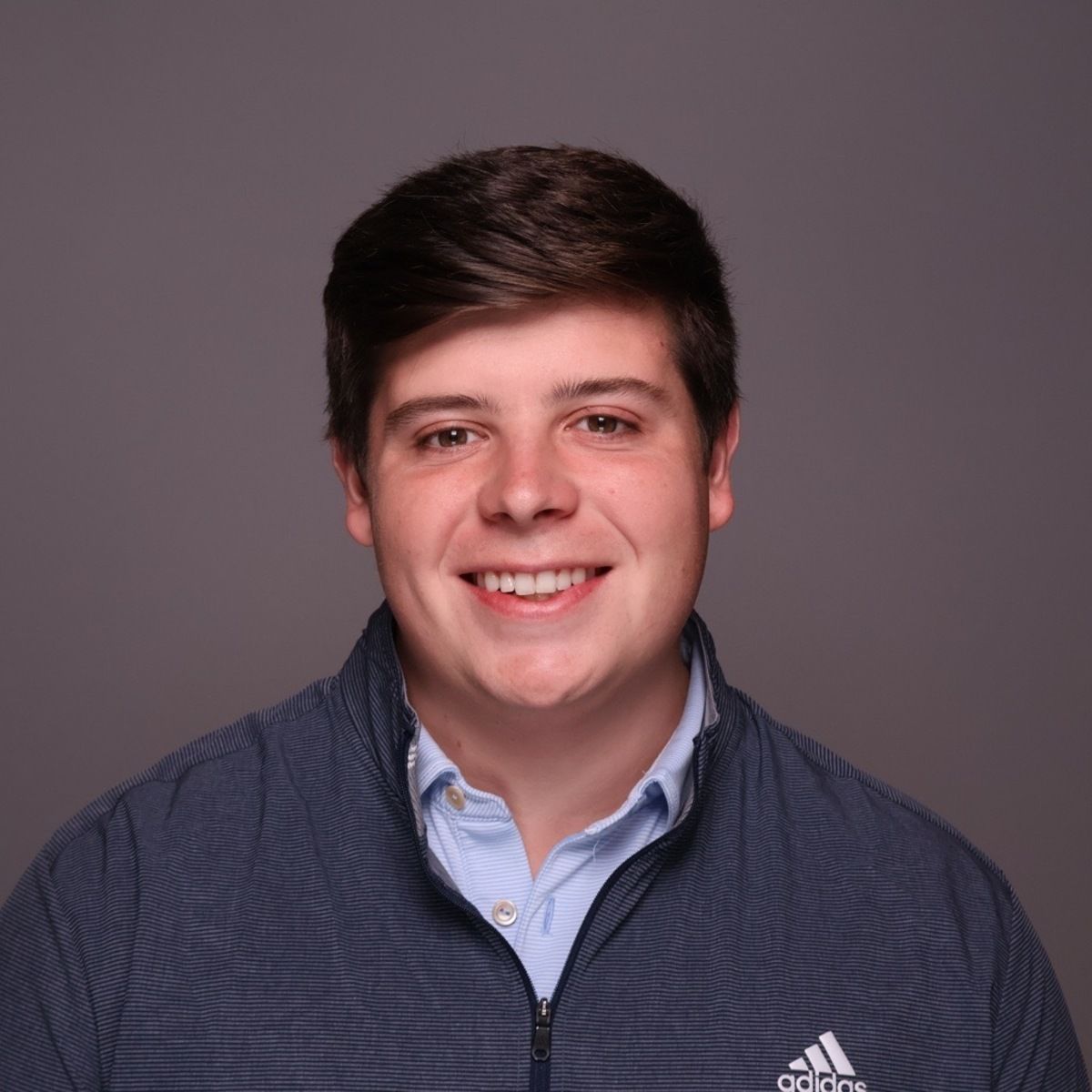
Meet Ray Bernardo.
Two degrees, partnerships role with U.S. Soccer, Sports Business Ventures Next Wave Award Winner - careers don’t start much better than that. What you don’t see is the work it took to get here.
Ray was a Division I student-athlete at Texas A&M, competing in cross country and track, eventually stepping into a leadership role as a team captain. At the time, her focus was less on the business of sports and more on what came naturally to her academically. She was a psychology major and had plans to pursue a career in sports psychology, a path that felt like a logical extension of her experience as an athlete, especially after working with an incredible sports psychologist herself.
As she got closer to graduation, that plan started to shift. The reality of what it would take to pursue that path, more school, more specialization, and a longer runway before starting a career, made her pause. Around that time, she built a relationship with Nishia McRay, who worked in student-athlete development at Texas A&M.
Nishia saw something in Ray early and encouraged her to think beyond the paths she had originally considered. She introduced her to the idea of a career in sports business and pushed her to explore graduate school as a way to open more doors within the industry.
After graduation, Ray decided to continue her education at the University of Central Florida in the DeVos Sport Business Management program, a move that strengthened her educational background, but also an opportunity to spend more time getting experience in the sports industry - something that she hadn’t been able to prioritize as a student athlete.

Ray’s Career Path
Rather than trying to pick a lane immediately, Ray focused on getting as much exposure as possible. She worked part-time in ticketing with Orlando City SC and the Orlando Pride, contributed editorial work covering running and brand campaigns, supported research initiatives, and took on roles that allowed her to see different sides of the business. None of these roles were meant to be the final destination, but together they gave her a clearer understanding of where she might fit best.
Those initial roles led her to Navigate, a boutique sports consulting agency, where she joined first as an intern and eventually moved into a full-time role after graduation. Starting her career in a smaller environment gave her the opportunity to work across multiple functions early on. She spent time on marketing strategy, supported partnership initiatives, worked in CRM systems, and contributed to client-facing projects across properties like Club América, the Milwaukee Brewers, and Florida State.
The breadth of that experience became one of the most valuable parts of her early career. It gave her a working understanding of how different parts of the business connect, and just as importantly, it helped her identify what she wanted more of. Over time, she found herself increasingly drawn to the partnership side of the business and the role it plays in driving revenue and connecting brands to fans in meaningful ways.
After three years with the agency, she was ready for the next chapter. She wanted to move into a role that was more directly tied to partnerships and revenue, and she didn’t see a clear path to get there at Navigate. So, instead of waiting for the right opportunity to appear, she took a leap of faith: leaving Navigate and setting out on her search full time.
That stretch wasn’t easy. The job market was competitive, she was living in uncertainty, and like many people in similar positions, she found herself navigating a process that required patience more than anything else. During that time, she took on a short-term role with The Collectiv, a venture capital firm focused on sports tech and emerging leagues. The experience gave her a different perspective on the industry and allowed her to stay engaged while continuing to search for a full-time role that aligned with her long-term goals.
Then came the moment that changed everything. Late in an interview for a partnerships role, she was asked a simple question: how could she prove her understanding of partnerships if she had never formally held the title?
At that moment she didn’t have the answer, and consequently didn’t land that role. Tough.
Not to be deterred, Ray set out to prove the understanding she knew she had. She began posting everyday on LinkedIn, breaking down partnerships, sharing observations, and adding her perspective on what she was seeing across the industry. In addition to posting, she also went all in on networking, setting up multiple conversations a day with people across the industry with the sole goal of learning more about them and the industry.
It didn’t take long for her efforts to start paying off. People became familiar with her work, her perspective, and her name. When opportunities came up, she was no longer starting from zero.
What is Partnership Marketing?
Partnership marketing in sports focuses on building and executing relationships between brands and sports properties like teams, leagues, and governing bodies. The role sits at the intersection of sponsorship sales, marketing, and brand strategy, ensuring that partnerships deliver value for both the organization and the brand. This includes developing integrated campaigns, activating sponsorship assets across digital and in-person channels, and aligning partner objectives with the broader goals of the organization.
The day-to-day can vary widely. One day might involve collaborating with internal teams like social, content, and legal to bring a campaign to life. Another might include working directly with brand partners to plan activations, track performance, and optimize results. As the industry continues to evolve, partnership marketing has become increasingly focused on storytelling, data, and creating authentic connections between brands and fans.
Through that network, she was introduced to the team at the U.S. Soccer Federation. She connected with multiple members of the team, and when a role eventually opened up, she was the one they called. She still had to go through an in-depth interview process, but she was ready.
Today, Ray is a Manager of Partnership Marketing at U.S. Soccer, working across a portfolio that includes brands like Visa, Bank of America, and Michelob Ultra. Her role sits at the intersection of strategy and execution, working across internal teams and external partners to bring campaigns to life.
The timing of that opportunity is hard to ignore. With the World Cup coming to the United States, the sport is entering one of the most important moments it has ever had in this country. The growth of the game is accelerating, the attention is increasing, and the expectations are higher than they have ever been.
For Ray, it’s the kind of moment that reflects everything that led up to it. The decision to explore the industry more deeply, the willingness to take on a range of roles early in her career, the patience during a long job search, and the consistency she showed when no one was watching all played a part.
When the right opportunity came, she had done the work to be ready for it.
And now, she’s making an impact on the beautiful game right when it matters most.
Q&A: Landing a job at U.S. Soccer with Ray Bernardo

Q. You started your career at a smaller, boutique agency with Navigate. What are the advantages of starting in that type of environment, and how did it help shape your early development?
A. Starting small inevitably sets you up for success when you want to go big– my time with Navigate exposed me to so many different areas of the business, from social media marketing, events/hospitality and industry award nominations to data-driven consulting. I even had the chance to be a supporting author & researcher for the TEDx Talk, "How Sports Can Tackle the Loneliness Crisis". TLDR: starting small offered me greater flex in exploring my interests.
Q. You became very active on LinkedIn during your job search, using it to share insights and build visibility. How did that consistency impact your opportunities, and what advice would you give to others looking to do the same?
A. Starting out, consistency was paramount. Not only did sharing my thoughts on the industry give my days structure and a small break from the strain of the job hunt, but it helped me expand my surface area for luck. While this industry is small, you're only as successful as you are visible in many ways. Posting consistently helped me refine my voice and was a jumpstart for conversations I 100% wouldn't have had otherwise. Without an inkling of doubt– just start! You truly never know who's watching.
Q. You went through an extended job search before landing your current role. What did you learn during that process, and what advice would you give to others navigating a similar stretch?
A. It was definitely a major stretch of self-discovery for me, in the sense that I was forced to really dial in on what I was searching for the most in my next opportunity. Most importantly: it made me realize we're all just searching for connection. Whether it was a networking call set up via cold outreach, or getting connected with a friend-of-a-friend, there are so many incredible people in this industry who are willing to help if you take the time to show up authentically.
My heart goes out to anyone on the hunt right now, trust I know just how draining it can be. Be open to as many conversations as you can, and don't get discouraged when interviews or applications don't go your way. One of the most grounding thoughts I held onto throughout the hunt was a trust that everything would work out how it was supposed to. I never really understood when people would say this to me before, but now being on the other side, I can say that it really did.
Key Takeaways
1. It pays to be visible
Ray didn’t wait for someone to validate her experience. When her understanding of partnerships was questioned, she started sharing her perspective publicly. Consistent posting on LinkedIn turned into recognition, credibility, and ultimately opportunities. You don’t need permission to show what you know.
2. Do the unglamorous work, and do it well
From running steeplechase in college to taking on broad, unglamorous responsibilities early in her career, Ray consistently leaned into the opportunities others avoided. Those moments compound. The jobs that feel small or inconvenient are often the ones that build the skillset that separates you later.
3. Be curious, not transactional
During her job search, Ray wasn’t networking to ask for a job. She was meeting people to learn. That approach led to better conversations, stronger relationships, and a deeper understanding of the industry. When you focus on curiosity instead of immediate outcomes, the opportunities tend to follow.
Feeling Inspired? Check out these opportunities.
-Explore careers at U.S. Soccer
Closing Thoughts
Thank you for reading this week’s edition of So You Want to Work in Sports. I appreciate you being part of this community.
If you have ideas, feedback, or future guest suggestions, feel free to reach out at [email protected].
If you want more hands-on support as you navigate the start of your career within sports, book a 1:1 session with me here. The sooner you start preparing, the more confident you will feel when opportunities come your way.
Win the week!
-Ethan
Arnold Schwarzenegger has a newsletter.

Yeah. That Arnold Schwarzenegger.
So do Codie Sanchez, Scott Galloway, Colin & Samir, Shaan Puri, and Jay Shetty. And none of them are doing it for fun. They're doing it because a list you own compounds in ways that social media never will.
beehiiv is where they built it. You can start yours for 30% off your first 3 months with code PLATFORM30. Start building today.