In partnership with


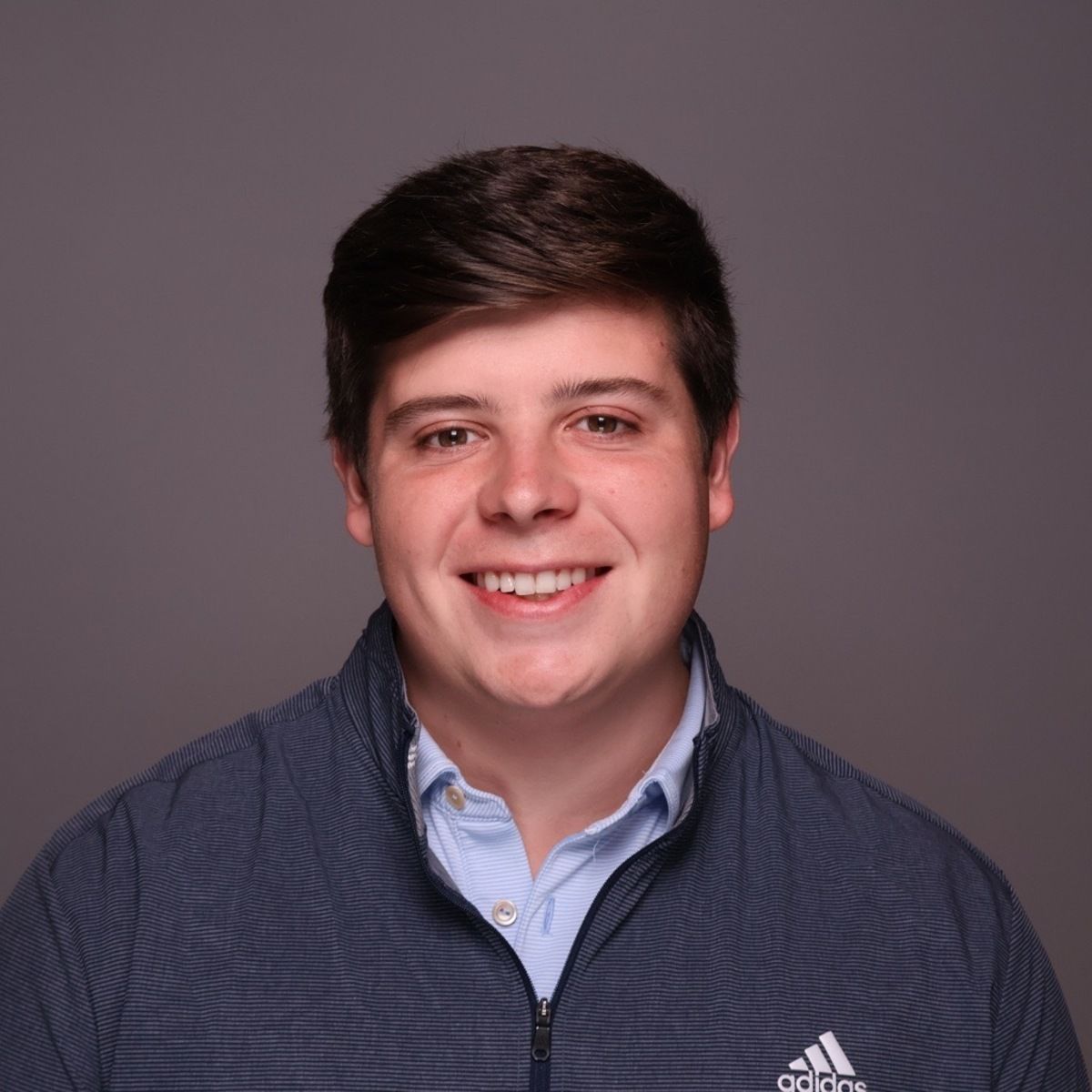
Meet Turner Hahn.
Turner Hahn arrived at the University of Cincinnati planning to become an FBI agent.
He had grown up outside Cleveland playing just about every sport he could, but never really considered turning that passion into a career. That started to change when his older sister connected him with an opportunity as a student manager for Cincinnati Women’s Basketball.
Turner initially saw the job as a way to help pay for school. He had no idea it would become his introduction to working in sports.
By the end of his freshman season, the other student managers had left the program, leaving Turner responsible for everything from setting up practice and doing laundry to packing for road trips. During COVID, he even suited up as a practice player when outside players weren’t allowed around the team.
The experience was enough for him to switch his major from criminal justice to sports administration, but he still wasn’t sure where within the industry he wanted to end up.
That answer came during an 8 a.m. class his senior year.
Representatives from the Cleveland Cavaliers came in to talk about their Inside Sales program, an entry-level role built around selling tickets and developing young salespeople. Turner had never considered ticket sales before, but something about it caught his attention.
He went to another Cavaliers presentation later that day, introduced himself, and learned they were holding open interviews the next morning. Turner showed up in a suit and tie, advanced through the process, and about a month later had his first full-time job in sports lined up and waiting for him after graduation.

Turner’s Career Path
Inside Sales was Turner’s introduction to the grind of working in sports. He was making upwards of 80 calls a day, working Cavaliers home games and competing alongside a group of other young salespeople all trying to prove themselves.
Even with the long hours, it was also where he fell in love with sales. Turner liked the competition, but even more than that, he loved the relationships. A ticket sale could turn into a season-long connection with a fan or business, and learning how to build those relationships became the foundation of how he approached the job.
After a year in Cleveland, Turner learned there wasn’t going to be an opportunity for him to move up into an account executive role. He started working with his managers to network with other teams in Ohio, with a particular interest in returning to Cincinnati.
In Cincinnati there were three options to consider: Bengals, Reds, and FC Cincinnati. He struck out with the first two, but hit it off with the team at FC Cincinnati. The problem - as much as they liked him, they didn’t have an open role for him either.
But Turner knew there was something there, so he moved anyway.
He returned to Cincinnati without a job lined up and told his contact at the club he was willing to do whatever it took to get into the organization. When a game-day position became available, Turner took it, even though it meant working only a few hours a week scanning tickets at the gate.
He spent his first two games scanning tickets, the next two working in a premium hospitality section, and then… an account executive unexpectedly left the organization.
Turner had spent months building the relationship, moved to Cincinnati before there was an opening, and gotten his foot in the door however he could. When that opportunity became available, it was a no brainer for the club.
Turner's gamble turned into nearly two years with FC Cincinnati and the most productive stretch of Turner’s young career. He went from an entry-level sales program to managing his own book of business, selling season tickets and premium seating, and building relationships with clients he still keeps in touch with today. In 2025, he reached 123% of his annual goal, and he followed it up the next season by ranking first on his team for full-season equivalents sold.
Turner also started looking for ways to contribute beyond his own numbers. When the manager who ran the team’s sales contests left, Turner volunteered to take them on, giving him an opportunity to build and lead something for the larger team.
Ticket Sales in Sports
Ticket sales is the revenue-generating side of a sports organization responsible for connecting fans and businesses with live experiences. Beyond single-game tickets, sales teams can sell season tickets, premium seating, suites, group experiences, and corporate hospitality while building long-term relationships with fans and clients.
For those looking to break into sports, ticket sales can also be one of the most accessible places to start. Most professional teams have entry-level sales programs designed to hire and develop young professionals, often with little to no previous sales experience. From there, strong performers can progress into Account Executive and Account Manager roles before moving into leadership positions like Director and Vice President. And the path doesn’t have to stop in ticketing. Because ticket sales touches so much of the business, many team presidents and senior executives across sports actually began their careers selling tickets.
By 2026, Turner was ready for another challenge. FC Cincinnati had become a tough place to sell (for a good reason): demand was high, the club had a season-ticket waitlist, and many premium products were already spoken for. After spending his entire life in Ohio, Turner was also ready to see where else his career could take him.
Using TeamWork Online, he found an opening with the Jacksonville Jaguars tied to the franchise’s Stadium of the Future project.
The Jaguars were building an in-house team to sell the transformed stadium ahead of its 2028 opening. After four rounds of interviews, including B2C and B2B sales role-plays and a final conversation where he was asked to make the case for himself over the other candidates, Turner got the job.
Now, he’s facing a sales challenge unlike anything he encountered before.
At FC Cincinnati, Turner was selling a successful team with more demand than available inventory. In Jacksonville, he’s helping sell the vision for a stadium that isn’t finished yet. Prospective buyers can see renderings and hear about the canopy, wider concourses and improved experience, but much of what Turner is selling won’t become reality until 2028.
But to Turner, that's what makes it fun.
When the new stadium opens, he will be able to walk inside knowing he helped fill it. Years from now, he hopes he can return with his kids, point toward the building and tell them he played a part in bringing it to life.
Ticket sales can get a bad rap, and Turner will be the first to admit it, but if you can approach it the way Turner does, you’ll see there is a lot more opportunity on the other end of the line than you ever imagined.
Q&A: Breaking into Sports Through Ticket Sales with Turner Hahn

Q. Ticket sales sometimes carries a negative reputation among students trying to break into sports. Why do you think it’s actually one of the best places to start a career in the industry?
A. I think ticket sales is one of the best places to start your career because you get so many reps early on. You're learning how to talk to people, handle rejection, build relationships, and provide real value to fans. Those skills carry over into pretty much every area of sports. It also gives you a really good understanding of every aspect of the business and puts you around a lot of different departments and people.
Q. You have worked with top sales professionals across 3 major sports. What separates the best sales professionals in sports?
A. I'd say consistency, being coachable, and genuinely caring about people. The best salespeople I've worked with don't just focus on getting the sale. They take the time to ask questions and understand what the customer actually needs and then make a recommendation based on what they are looking for. They show up every day, stick to a process, and are always looking for ways to get better.
Q. You often describe relationships like a bank account, where you need to make deposits before you can make withdrawals. What does that look like in practice for someone trying to build their network early in their career?
A. Every interaction is either a deposit or a withdrawal. Asking someone for a job, an introduction, or a favor is a withdrawal. Helping someone, congratulating them, commenting on posts, or just checking in is a deposit. Especially early in your career, you should focus on making more deposits than withdrawals. You don't need hundreds of connections. You need to meaningfully engage with the people you are connected with.
Key Takeaways
1. Deposit more than you withdraw
Turner compares relationships to a bank account. Before asking someone for advice, an introduction, or an opportunity, make deposits by staying in touch and showing genuine interest. That approach helped Turner build relationships with clients, coworkers, and industry connections that have continued well beyond each job.
2. Bet on yourself
Turner moved back to Cincinnati without a full-time job and took a game-day role scanning tickets because he wanted to get inside FC Cincinnati. It was a gamble, but when an Account Executive position opened a few games later, he had already built the relationship and put himself in position to earn it.
3. Don’t limit yourself to the sports you know
Turner knew very little about soccer when he joined FC Cincinnati. By the time he left, he was watching every match and had become a genuine fan of the sport. His advice: don’t limit your search to the teams or sports you already love. The right opportunity might introduce you to something new.
Feeling Inspired? Check out these opportunities.
Closing Thoughts
Thank you for reading this week’s edition of So You Want to Work in Sports. I appreciate you being part of this community.
If you have ideas, feedback, or future guest suggestions, feel free to reach out at [email protected].
If you want more hands-on support as you navigate the start of your career within sports, book a 1:1 session with me here. The sooner you start preparing, the more confident you will feel when opportunities come your way.
Win the week!
-Ethan
Want more from Turner?
Connect on LinkedIn
Blu Dot surpasses 2,000% ROAS with self-serve CTV ads

Home furniture brand Blu Dot blew up on CTV with help from Roku Ads Manager. Here’s how:
After a test campaign reached 211,000 households and achieved 1,010% ROAS, the brand went all in to promote its annual sales event. It removed age and income constraints to expand reach and shifted budget to custom audiences and retargeting, where intent was strongest.
The results speak for themselves. As Blu Dot increased their investment by 10x, ROAS jumped to 2,308% and more page-view conversions surpassed 50,000.
“For CTV campaigns, Roku has been a top performer,” said Claire Folkestad, Paid Media Strategist, Blu Dot. “Comping to our other platforms, we have seen really strong ROAS… and highly efficient CPMs, lower than any other CTV partner we've worked with.”
Using Roku Ads Manager, the campaign moved from a pilot to a permanent performance engine for the brand.